
How to Source Classic Dress Shirts from a Turkish Manufacturer
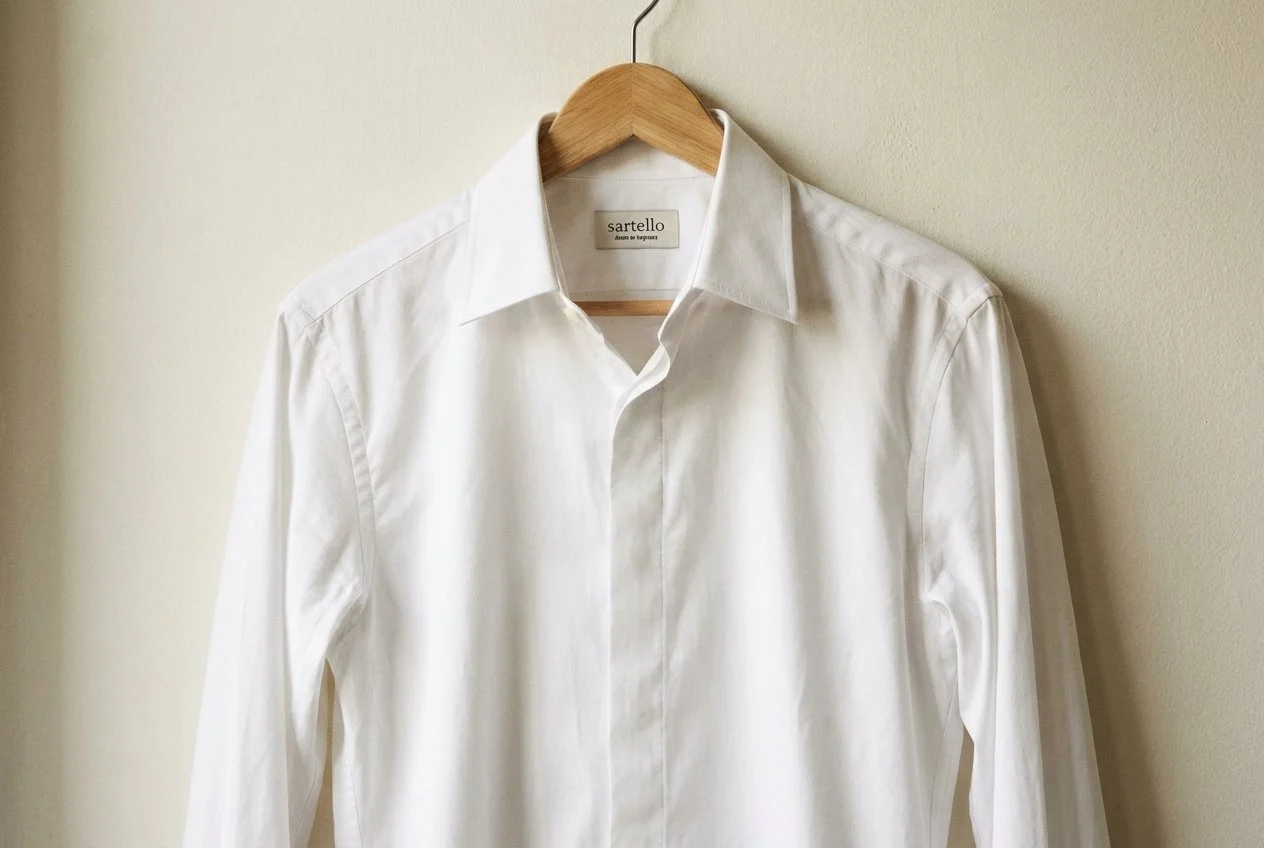
Classic dress shirt
The classic dress shirt is one of the most deceptively complex garments in menswear. It looks simple. It's not. Every detail — collar geometry, interlining stiffness, placket width, button quality, seam finishing — contributes to whether the shirt reads as premium or forgettable. For brands building a dress shirt programme, getting production right from the start matters enormously.
Turkey has been manufacturing dress shirts for European and international brands for decades. The combination of domestic fabric supply, skilled production labour, and competitive lead times makes it one of the most practical sourcing destinations for brands in the mid-to-premium segment.
What Defines a Classic Dress Shirt
A classic dress shirt isn't just a formal shirt — it's a garment with specific construction standards that determine how it wears, how it holds up, and how it's perceived by the end customer. The collar must sit correctly, the placket must lie flat, the cuffs must have enough interlining to hold their shape without feeling stiff. These aren't details you can leave to the factory's discretion. They need to be specified.
This is also a category where Turkey genuinely excels. Turkish shirt factories — particularly in Istanbul and the broader Marmara region — have been producing structured woven shirts for European buyers for 20-30 years. Pattern makers and line supervisors here understand European sizing, European collar preferences, and European quality expectations in a way that factories in regions without this history simply don't.
If you're newer to the sourcing process and still deciding between production models, our guide on private label vs. white label shirt manufacturing is a good starting point before committing to a spec.
Fabric: The Foundation of the Shirt
For classic dress shirts, fabric choice defines the product's positioning more than almost any other decision. Poplin is the default — smooth, lightweight, slightly lustrous, and suitable year-round. It's what most people picture when they think of a dress shirt.
Twill offers more body and texture. It drapes differently and tends to work better for autumn and winter collections or for brands positioning slightly more toward business casual. Oxford — particularly pinpoint Oxford — sits in a similar space: slightly softer in hand, with a basket-weave texture that reads as smart without being stiff.
The right choice depends on your customer and your price point. A brand targeting corporate buyers in Northern Europe will often go poplin for summer and twill or Oxford for winter. A brand selling into warmer markets might stay with poplin year-round.
Turkish mills produce all of these domestically, which keeps fabric lead times short and colour consistency high — particularly important for whites and pale blues where lot-to-lot variation is easy to spot.
Collar: Where the Shirt Lives or Dies
The collar is the most visible element of a dress shirt and the most technically demanding to produce correctly. A collar that's 2mm asymmetric, or that gaps at the band, or whose points won't lie flat — these are the details that separate a premium shirt from a mediocre one.
The two collar styles that dominate the European market are the semi-spread (the contemporary standard, works with or without a tie) and the kent (the classic, slightly narrower spread, the safest option for a broad market). French and cutaway collars are more niche — strong in Italian and Scandinavian markets but not universal.
Whatever collar you choose, specify collar band height, point length, interlining type (fused is standard; floating is premium), and whether you require collar stays. Don't leave these decisions to the factory.
Construction Standards to Specify
Beyond fabric and collar, the details that define dress shirt quality are largely invisible to the end customer — until they're wrong.
Seam quality matters. Standard lockstitch at 12-14 stitches per inch is the baseline. Stress points — collar attachment, placket base, sleeve placket — should be bar-tacked. Buttons should be attached with a shank and pass a pull test. Cuff interlining should hold its shape after washing without bubbling or delaminating.
For brands producing in the €80-€200 retail range, these are non-negotiable baselines. Communicate them explicitly in your tech pack and verify them in your first sample. Our post on what to expect from shirt production lead times in Turkey covers how to structure your sampling and approval timeline to catch these issues before bulk.
MOQ and Lead Times
Classic dress shirts take longer to produce than casual shirts — the construction is more involved. A realistic timeline from order confirmation to ex-factory is 10-14 weeks, including sampling. For autumn/winter collections, this means confirming orders by May or June at the latest.
On MOQ, specialist Turkish factories typically work from 50-100 pieces per style per colour for smaller programmes. If you're earlier in your brand's growth, a smaller specialist manufacturer gives you more flexibility on construction details and sampling iterations without committing to volume you're not ready for.
Working with Sartello
Sartello has been producing structured woven shirts from Istanbul since 1994. Classic dress shirts — in poplin, twill, and Oxford — are at the core of what we do. We work with brands on private label programmes from tech pack review through to shipment, with a minimum order of 50 pieces per style per colour.
If you have specs ready, we can turn around a first sample within 2-3 weeks. If you're earlier in the process, we're happy to review a reference garment and work backward from there.
Get in touch through our contact page. We respond within 2 business days.
