
Private Label Shirt Manufacturing in Turkey: A Step-by-Step Guide for New Brands
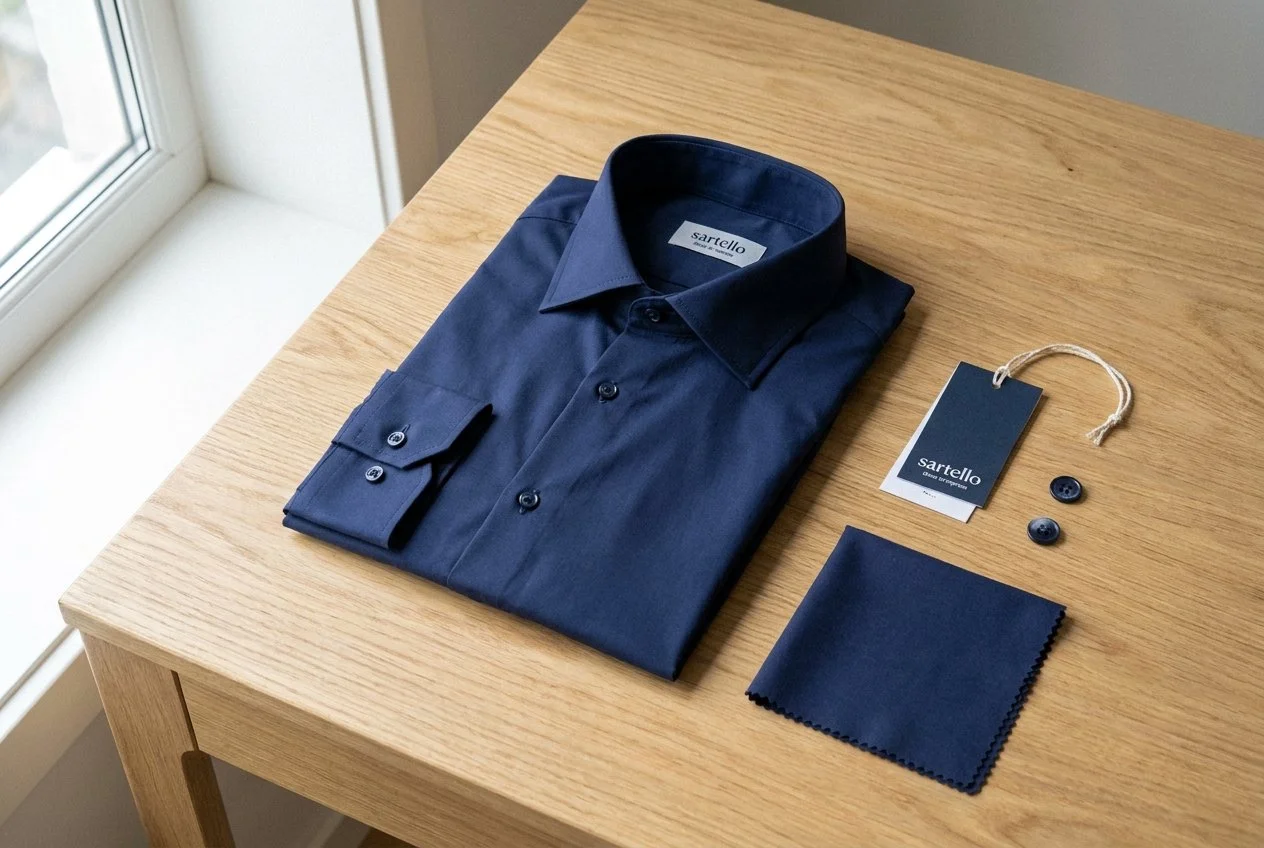
Poplin Navy Shirt
Starting a private label shirt brand is one of the more accessible routes into fashion — you're not building a factory, you're building a product and a brand around it. But accessible doesn't mean simple. The sourcing process has real complexity, and the brands that navigate it successfully are the ones who understand what they're getting into before they start.
Turkey is consistently one of the top choices for private label shirt production among European and international brands. Not because it's the cheapest option, but because the combination of fabric quality, construction expertise, and geographic proximity makes it the most reliable option at the mid-to-premium price point.
This guide walks through the private label production process from the beginning — what it involves, how it works in practice, and what to expect at each stage.
What Private Label Actually Means
Private label means you're selling a product manufactured by someone else under your own brand name. The factory produces the shirt; you put your label in it, your hangtag on it, and sell it as your own.
This is different from white label, where you choose from a factory's existing designs with minimal modification. Private label gives you control over the design, fabric, construction, and fit — which is why it's the right model for brands that care about product differentiation. We covered the distinction in detail in our post on private label vs. white label shirt manufacturing.
Step 1: Define Your Product Before You Talk to Anyone
The most common mistake new brands make is approaching manufacturers before they know what they want to make. Factories quote and sample based on specs. If you don't have specs, you'll get generic samples that don't reflect your vision — and you'll waste time and money going back and forth.
Before reaching out to any Turkish manufacturer, have answers to the following:
What shirt category? Dress shirts, casual shirts, resort wear, workwear?
What fabric? Poplin, Oxford, linen, twill, flannel — and what weight and composition?
What fit? Slim, regular, relaxed?
What collar style?
What's your target retail price, and what does that imply about your production budget?
What markets are you selling into, and what are their sizing standards?
You don't need a full tech pack at this stage. But you need enough clarity to have a real conversation.
Step 2: Find the Right Factory for Your Volume and Category
Not all Turkish shirt factories are the same. Some specialise in dress shirts for European corporate buyers. Some focus on casual and resort wear. Some work exclusively with large brands on high-volume orders. Others — like Sartello — work with growth-stage brands on smaller, more flexible programmes.
The key criteria when evaluating a factory:
Category fit. A factory that produces 10,000 units of basic dress shirts per month is not the right partner for a 100-piece premium linen resort shirt run. Make sure their core expertise matches your product.
MOQ alignment. If you're starting out, you need a factory willing to work with 50-200 pieces per style. Many larger factories won't go below 300-500. Don't try to negotiate a large factory down to your volume — find a factory whose standard MOQ fits where you are.
Communication quality. Your factory contact will be one of the most important relationships in your business. How quickly do they respond? How clearly do they answer questions? Do they flag problems proactively or wait for you to discover them?
Sample quality. Always request samples before committing. The sample tells you more than any conversation.
Step 3: Submit Your Tech Pack and Get a Quote
A tech pack is a technical document that tells the factory exactly how to build your shirt. It includes measurements, construction details, fabric specifications, trim details (buttons, labels, hangtags), and packaging requirements.
If you don't have a tech pack, you have two options: hire a freelance technical designer to create one, or work with a factory that offers tech pack development as part of their service. Some Turkish manufacturers — particularly those accustomed to working with smaller brands — will help you develop specs from a reference garment or detailed brief.
Once the factory has your tech pack, they'll provide a quote covering fabric cost, CMT (cut, make, trim), and any additional services. Always ask for an itemised quote so you can understand where the cost sits and where there might be room to adjust.
Step 4: Sample Development
This is the most important stage of the process and the one most brands underestimate.
The first sample (proto sample) is built from your tech pack. It may not be in your final fabric — the factory might use a similar fabric to check construction and fit first. Review it carefully:
Does the fit match your spec?
Is the collar sitting correctly?
Is the placket flat and even?
Do the buttons and buttonholes look right?
Are the proportions what you expected?
Send detailed, written feedback with photos. Don't just say "the collar looks wrong" — say "the collar points are 5mm too short and the band is sitting 3mm too high at the back." Specific feedback produces specific corrections.
Plan for 2-3 sample rounds before approving for bulk. This is normal. Rushing through sampling to save time almost always costs more time later through bulk production problems.
For a clearer picture of how sampling fits into the broader production timeline, see our post on shirt manufacturing lead times from Turkey.
Step 5: Approve Fabrics and Trims
Before bulk production begins, approve physical fabric swatches and trim samples. This means:
Lab dips — fabric dyed to your colour spec, approved against a Pantone or physical reference
Bulk fabric swatch — from the actual fabric lot that will be used in production
Button samples — physical buttons in the specified size and material
Label and hangtag proofs — final artwork on the actual label material
Don't skip this step. Colours look different on screen than in person. A lab dip approval takes a few days and prevents expensive problems at the production stage.
Step 6: Confirm the Order and Begin Production
Once your final sample is approved and all materials are confirmed, you'll sign off on the production order. At this point the factory will typically request a deposit — commonly 30-50% of the order value — before beginning bulk production.
During production, stay in contact with your factory contact. A mid-production update with photos of cut panels and sewn garments is reasonable to request for first orders. You're not micromanaging — you're building the communication habits that will make future orders smoother.
Step 7: Quality Control Before Shipment
Before your order ships, inspect it. For first orders, a third-party QC inspection is strongly recommended — companies like QIMA or Bureau Veritas operate in Turkey and can inspect your production against your approved specs for a few hundred dollars. It's cheap insurance.
At minimum, check:
Measurements against your size spec
Colour against approved lab dip
Construction quality on a random sample of garments
Labelling and packaging compliance
If there are issues, it's far better to find them in Istanbul than in your warehouse after the order has shipped.
Step 8: Shipment and Incoterms
Agree on Incoterms before you place the order, not after. The most common options for Turkey-to-Europe shipments:
FOB Istanbul — factory delivers to port, you arrange freight from there
DAP — factory delivers to your door, you pay import duties
CPT — factory arranges freight to destination, risk transfers at origin
For first-time importers, DAP is often the simplest — you pay more, but the factory handles logistics. As your volume grows and you build freight relationships, FOB typically becomes more cost-effective. We covered Incoterms in more detail in our post on wholesale shirt production in Turkey.
Working with Sartello on Your First Private Label Order
Sartello is a family-owned Istanbul shirt manufacturer with 30 years of production experience. We work with growth-stage brands and established labels on private label shirt programmes — from the first conversation through to delivery.
Our minimum order is 50 pieces per style per colour. We offer tech pack support for brands earlier in the development process, and we work with domestic Turkish fabric mills for fast sampling and consistent quality.
If you're ready to start — or just have questions about the process — get in touch through our contact page. We'll respond within 2 business days.
